Market data terminal in Web and Telegram - for retail investors.
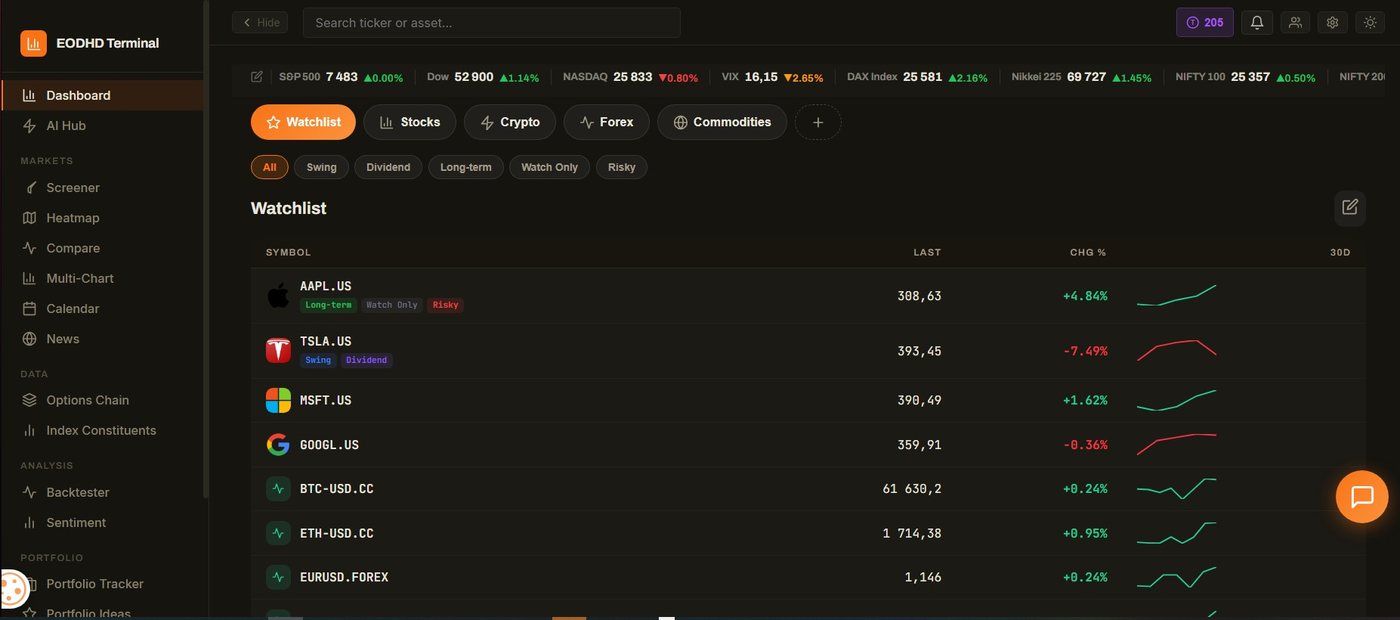
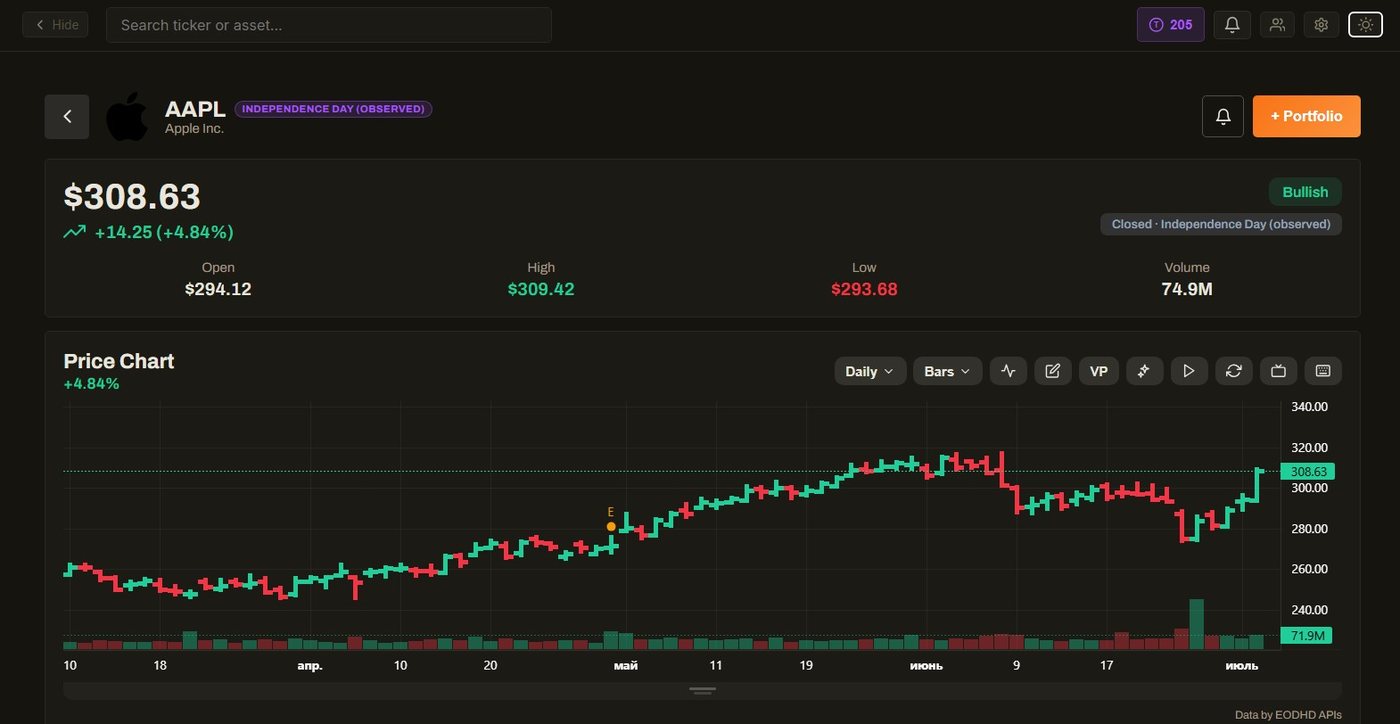
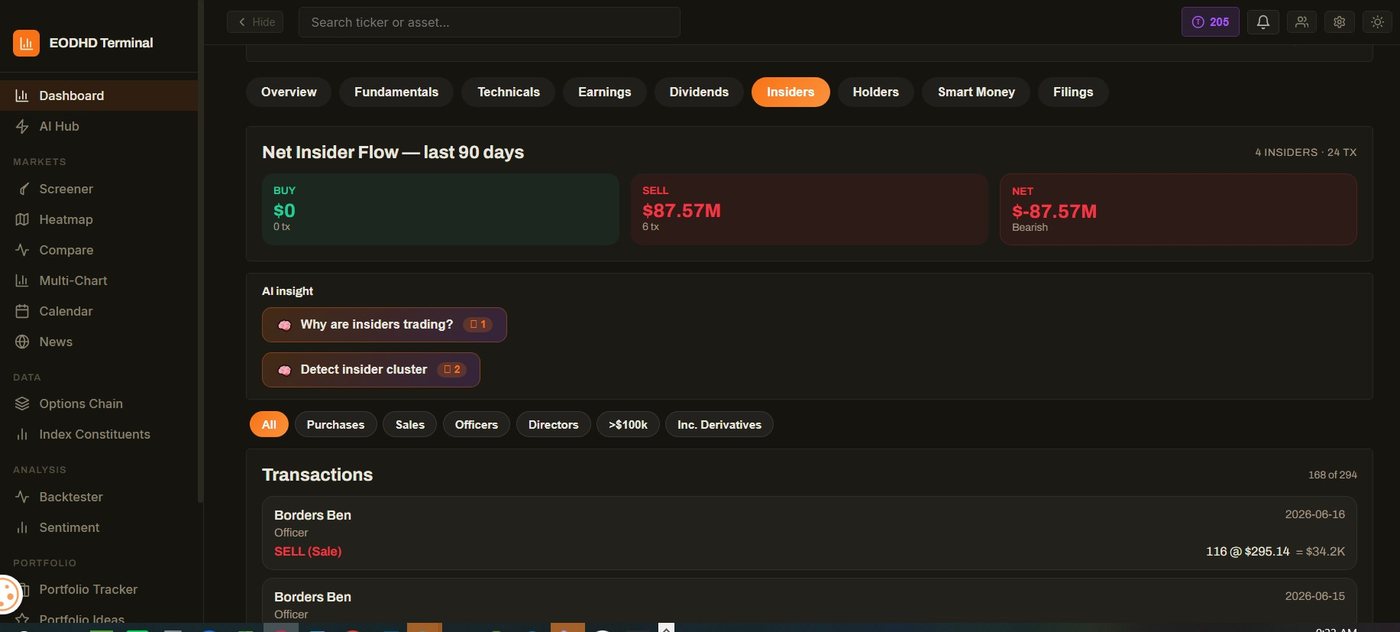
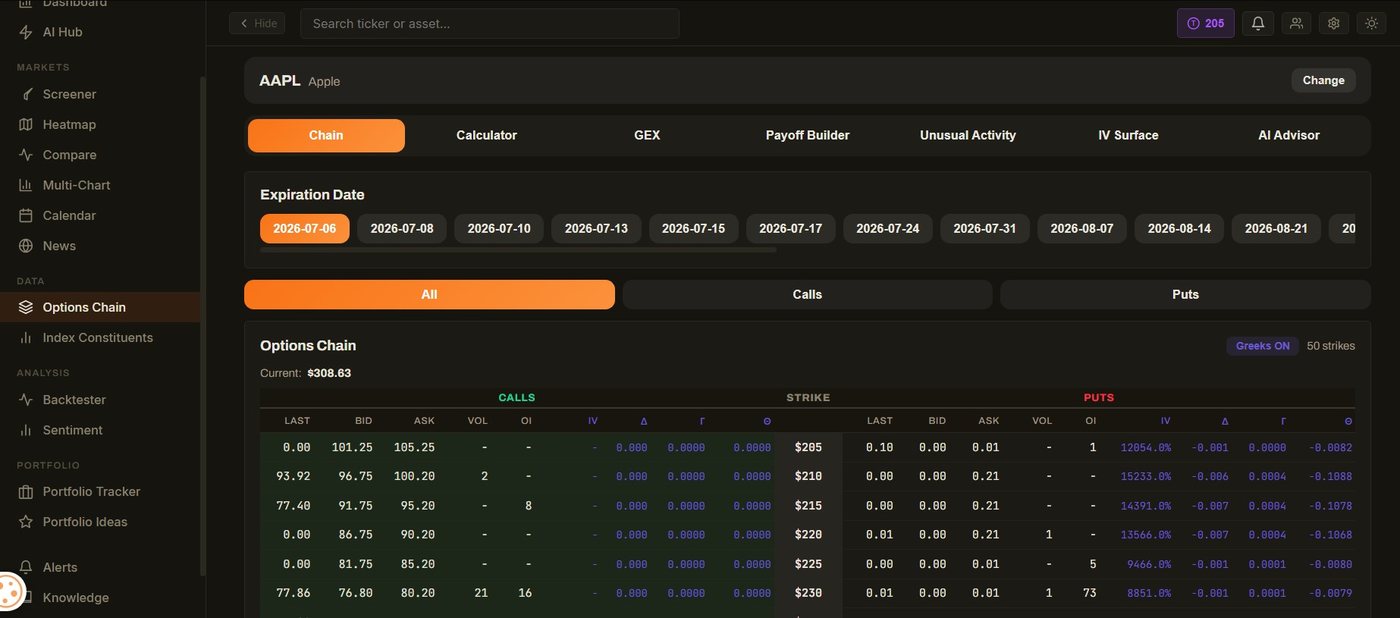
Two full-fledged products under one brand, sharing the same data. A desktop terminal with charts, screener, options, backtester and AI chat - for real work. A Telegram app - a pocket companion with native Stars payments. Insider trades from SEC filings, Smart Money, real-time data that survives a page reload. Data is free; AI runs on tokens with a clear price per action.
A retail investor lives on three devices - and the data differs on each.
In the morning they study a chart on the desktop, at lunch they open Telegram between things, in the evening they're back at the big screen. Each place has its own UI, its own watchlist, its own settings. And none of them has an AI assistant that can see their portfolio.
One product on two screens - desktop for work, Telegram for checking on the go.
Not «a phone version». The desktop terminal and the Telegram app are two full products with their own UX, running on one backend. Watchlist, portfolio, chart drawings, AI history are the same: changes upload within seconds, the other device picks them up on open.
Architecture that kept two products on one backend.
The main challenge - not letting the product split into two independent code branches. One codebase, two builds: the web terminal and the Telegram app assemble from the same modules, each with its own UX.
What came out after launch.
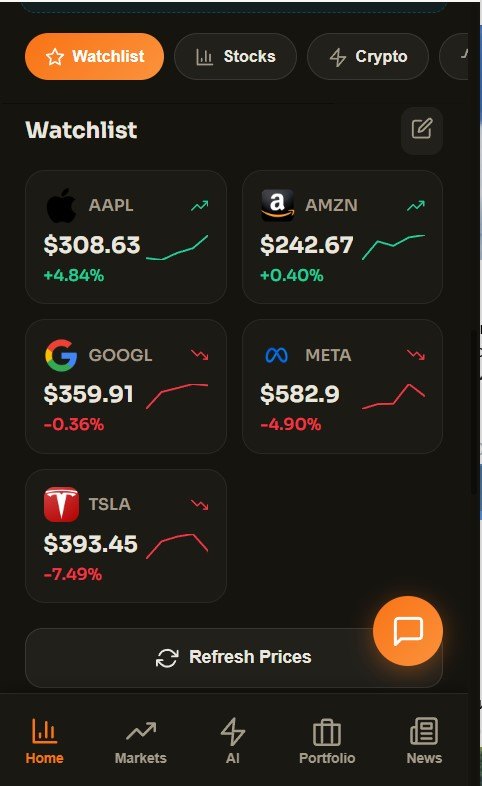
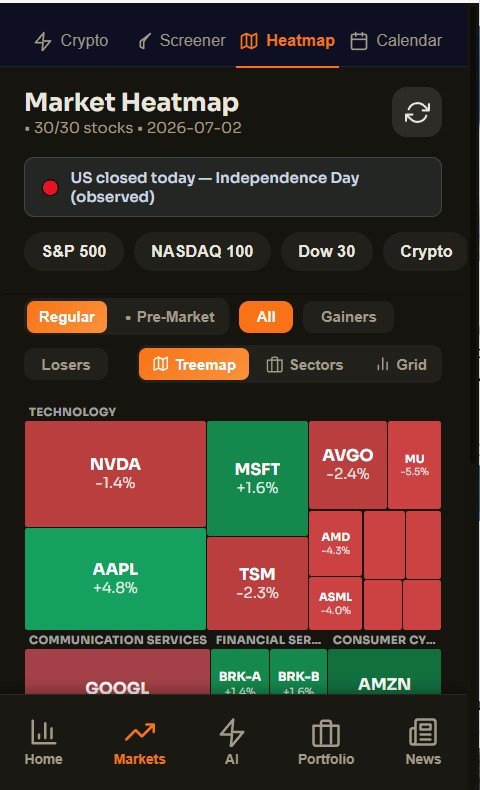
How it looks - web and Telegram.
One backend, two surfaces: a desktop terminal for serious work and a Telegram app to check on the go.
A similar task in your product?
If you run a data product or a fintech - and you're torn between desktop, mobile and AI - let's talk. In 30 minutes we'll map where two products converge on one backend in your case.